
Dr. Fallahzadeh: The International University of Islamic Denominations and Al-Azhar Can Provide a New Model of Scientific and Unifying Cooperation to the Islamic World / Religious Diversity: A Resource for the Epistemic Enrichment of the Islamic Ummah
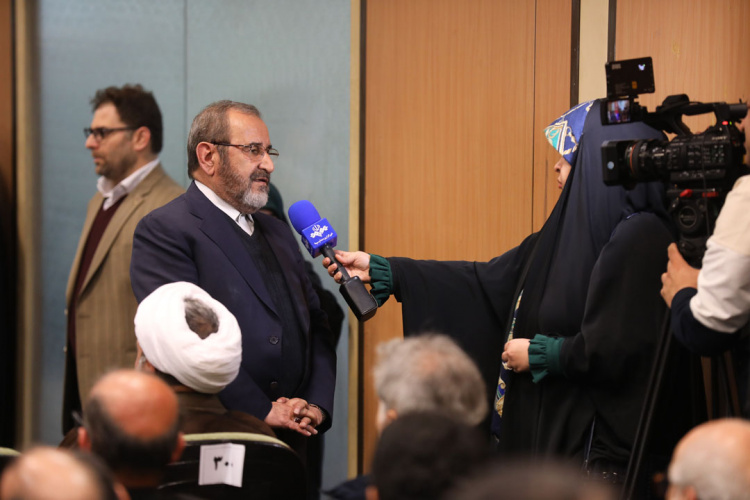
Dr. Fallahzadeh: The International University of Islamic Denominations and Al-Azhar Can Provide a New Model of Scientific and Unifying Cooperation to the Islamic World / Religious Diversity: A Resource for the Epistemic Enrichment of the Islamic Ummah The President of the International University of Islamic Denominations, emphasizing the need to redefine key concepts in the Islamic world, said: The interaction between Al-Azhar University and the International University of Islamic Denominations should not be limited to administrative cooperation, but requires Islamic social engineering on three levels: epistemic, institutional, and communicative. Dr. Mohammad Hadi Fallahzadeh, President of the International University of Islamic Denominations, in the memorial ceremony of the late Professor Dr. Ahmed Omar Hashim, former President of Al-Azhar University, held at the International University of Islamic Denominations, expressed his condolences on the passing of this prominent scholar to the academic community of the Islamic world, the family of the late, Al-Azhar University, the people of Egypt, and Muslim intellectuals, and praised his scientific and unifying services. He stated that Dr. Ahmed Omar Hashim was one of the prominent figures in knowledge, moderation, and religious dialogue in the Islamic world, and said: Al-Azhar has always been the flagbearer of Rahmanian Islam, religious rationality, and combating extremism, and the late Hashim played an effective role in strengthening the interaction between Islamic denominations and presenting a balanced and moderate interpretation of religion. The President of the International University of Islamic Denominations, referring to the mission of this university, added: The International University of Islamic Denominations was established after the victory of the Islamic Revolution and based on the ideas of Imam Khomeini (RA), and with the support and guidance of the Supreme Leader, it has focused on interfaith dialogue, comparative study of religions, and scientific confrontation with extremist and takfiri movements. Dr. Fallahzadeh emphasized the shared mission between Al-Azhar University and the International University of Islamic Denominations and clarified: The interaction between these two major academic institutions of the Islamic world should not be limited to memoranda of understanding and temporary collaborations, but requires a kind of Islamic social engineering that can lead to the reconstruction of social and epistemic relations within the Islamic Ummah. He considered Islamic social engineering to have three levels and said: At the first level, it is essential to redefine key concepts such as "Ummah," "Unity," "Disagreement," and "Religious Knowledge" in such a way that the diversity of denominations is viewed not as a threat, but as a resource for the epistemic enrichment of the Islamic Ummah. The President of the International University of Islamic Denominations continued: At the institutional level, structures must be designed that, while maintaining the independent identity of each denomination, create the possibility for creative cooperation, joint research networks, and flexible scientific governance, guiding academic institutions from parallel structures to integrated and synergistic structures. He identified the third level of Islamic social engineering as the "communicative level" and added: Creating a common language based on human dignity, active listening, accurate understanding of the views of the other, and avoiding reducing disagreements to conflict are prerequisites for any deep and sustainable cooperation between academic institutions in the Islamic world. Dr. Fallahzadeh, referring to the complex conditions of the Islamic world today, stated: Al-Azhar University, with its thousand-year history, and the International University of Islamic Denominations, as a new yet mission-driven institution, are at a critical point in history and can offer a new model of scientific and unifying cooperation to the Islamic
world. Finally, he suggested: To achieve this goal, a joint working group should be formed between the two universities to study the epistemic, institutional, and communicative prerequisites and draft a document of principles and guidelines for interfaith cooperation, laying the groundwork for sustainable and impactful collaboration.

Your Comment :